

[2026] Pass Key features of L4M7 Course with Updated 297 Questions
L4M7 Sample Practice Exam Questions 2026 Updated Verified
CIPS L4M7 exam covers a wide range of topics related to whole life asset management, such as the identification, acquisition, development, utilization, and disposal of assets. L4M7 exam is specifically designed to help professionals develop knowledge and skills that are required to manage the complete lifecycle of assets effectively. The CIPS L4M7 certification includes practical skills in monitoring, maintenance, and optimization of assets, focusing on sustainability, risk management, and governance.
CIPS L4M7 (CIPS Whole Life Asset Management) Certification Exam is a globally recognized certification program that is designed to equip professionals with the necessary knowledge and skills to manage assets effectively throughout their entire life cycle. CIPS Whole Life Asset Management certification is suitable for professionals who are involved in the acquisition, operation, maintenance, and disposal of assets.
NEW QUESTION # 125
Contracts for hire is a method for renting an item from a business that exists to provide items for use from time to time. A contract for hire has which of the following features?
- A. The person hiring the item contracts to use the item for a stated period, at an agreed rate per period, on agreed terms
- B. At the end of the hire period, the person hiring the item keeps possession and lends to other customers
- C. Ownership of the item transfers to the person hiring the item at the end of the agreed hire period
- D. A contract for hire is an agreement for the person hiring out the item to sell it to the person hiring the item
Answer: A
Explanation:
A contract for hire allows the hirer to use the item for an agreed period and rate, without ownership transferring. This option provides flexibility and avoids the financial commitment of ownership, aligning with whole-life asset management when short-term use or flexibility is more beneficial than purchase.
NEW QUESTION # 126
What is meant by the term 'obsolete stock'?
- A. Stock which has become outdated
- B. Stock which has been stolen
- C. Damaged stock
- D. Low value/low risk stock
Answer: A
Explanation:
Obsolescent stock is stock, usually finished goods, which is in good condition and satisfactory working but for which demand is irreversibly falling towards zero. Once this demand reaches zero the stock canbe considered 'obsolete'. It cannot be used or sold in its current state. Food ingredients (like candy canes) which are out of date are another example.
NEW QUESTION # 127
A warehouse manager is evaluating the use of Automated Guided Vehicles (AGVs) within a non-repetitive task environment. After reviewing their use, the manager decided to invest in a number of AGVs. Was this decision correct?
- A. No, as it commits the organization to a large capital cost
- B. No, as they are only suitable for use in repetitive task environments
- C. Yes, as it will increase stock picking accuracy and productivity
- D. Yes, as it will reduce the costs of labor by replacing a human worker
Answer: B
Explanation:
Automated Guided Vehicles (AGVs) are best suited for environments with repetitive tasks, such as fixed routes in production lines. In non-repetitive tasks, their efficiency and effectiveness decrease. Whole-life asset management prioritizes choosing automation that aligns with operational needs, ensuring cost-effectiveness and suitability for the given tasks.
NEW QUESTION # 128
In a fast-moving consumer goods (FMCG) organisation, a site has separate packaging areas for incoming and outgoing food. The incoming packages must be opened and unpacked before any of the food ingredients can be sorted for distribution. Production line workers run the risk of severe hand strains and knife-related injuries if the box cutting is done manually. Which of the following can eliminate any potential risk of injury to the production line workers while having the ability to Increase the throughput?
- A. Bar coding system
- B. Automated packaging systems and robotics
- C. Warehouse management system
- D. Radio frequency identification
Answer: B
NEW QUESTION # 129
XYZ Ltd is a retailer in the US. Their customers' demand for Thanksgiving and Christmas decora-tions usually rises in the end of the year. This irregular demand results in more required storage space for finished goods during peak seasons. Which of the following are possible solutions for dealing with required additional space?
1. Maximising aisle width
2. Keeping high buffer stock throughout the year
3. Maximising flexibility in warehouse layout
4. Installing mezzanine floor
- A. 2 and 4 only
- B. 1 and 2 only
- C. 1 and 3 only
- D. 3 and 4 only
Answer: D
Explanation:
Possible solutions to the high irregular or seasonal demand problems are listed below:
* Take advantage of the height of the warehouse
- Mezzanine floor
- High racking system (increase storage capacity but require high-reach material handling equip-ment)
* Eliminate dead stock or inventory
* Improve material flow
* Improve storage location method
* Consider using aisle space during demand peak
* Narrow aisles between racks (require narrow handling equipment)
* Carousel-type storage system
* Auto-storage and retrievals system (ASRS)
Reference: CIPS study guide page 22
LO 1, AC 1.1
NEW QUESTION # 130
Do all types of warehouses require access to daylight to reduce the cost of electricity?
- A. Yes, because organisation's need for artificial lighting and heating will reduce
- B. No, because some types of stock are sensitive to sunlight
- C. Yes, because sunlight sterilises inventories in damp conditions
- D. No, because only ventilation can help to reduce the humidity in the warehouse
Answer: B
Explanation:
The design of a building should consider the advantages of natural light as this can reduce the cost of artificial lighting and improve the environmental performance of the building. Daylight entering the building can also help reduce heating costs. Unfortunately some stocks react badly to direct sunlight, and some stock reacts badly to extreme of temperature or may require a specific temperature for storage. Some stock may require a warmer temperature than the ambient temperature and other stocks may require cooler temperature. For example, fabric and garment are sensitive to direct sunlight as ultraviolet light catalyses a reaction between the water present in all fabrics and atmospheric oxygen to create hydrogen peroxide. This is a bleaching agent and breaks down the chemical bonds that give dyes their colour.
Reference:
LO 1, AC 1.1
NEW QUESTION # 131
Which of the following is the material handling equipment which uses the suction force to lift an item?
- A. Dolly
- B. Vacuum lifter
- C. Sack truck
- D. Pallet stacker
Answer: B
Explanation:
VACUUM LIFTER uses the vacuum pad which attaches itself to a product. The suction force al-lows the product to be lifted (and rotated and placed). Vacuum lifters are used for moving and positioning glass sheets, but are also seen lifting boxes, plastic sacks, sheets of building materials and pipework. Some models feature hydraulic arms which allow easy movement of the lifted load. The lifting system will have a number of sucker pads and vacuum capability which determines the maximum weights and largest items that can be lifted.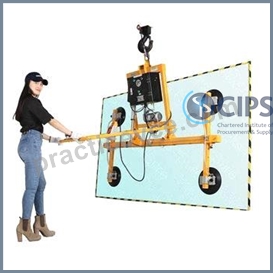
DOLLY consists of stack and sets of wheels (either casters or rollers) under the stack that allow the dolly and the heavy object on top of it to move easily and smoothly. For moving in a straight line, rollers is ideal. If you want to move manoeuvrability, dolly with sets of casters will let you swivel and turn.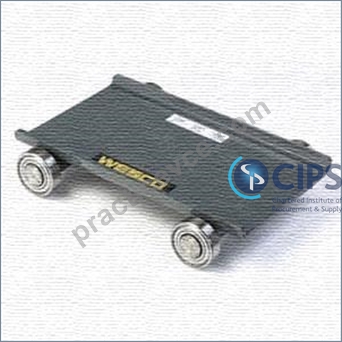
SACK TRUCK (hand truck) is an L-shaped box-moving handcart. It comprises a small base plat-form with two wheels at the base and a larger vertical structure. A small ledge to set objects on flat against the floor when the sack truck is upright. When moving, the truck and object are then tilted backward based on the vertical structure until the weight is balanced over the large wheels, making otherwise bulky and heavy objects easier to move.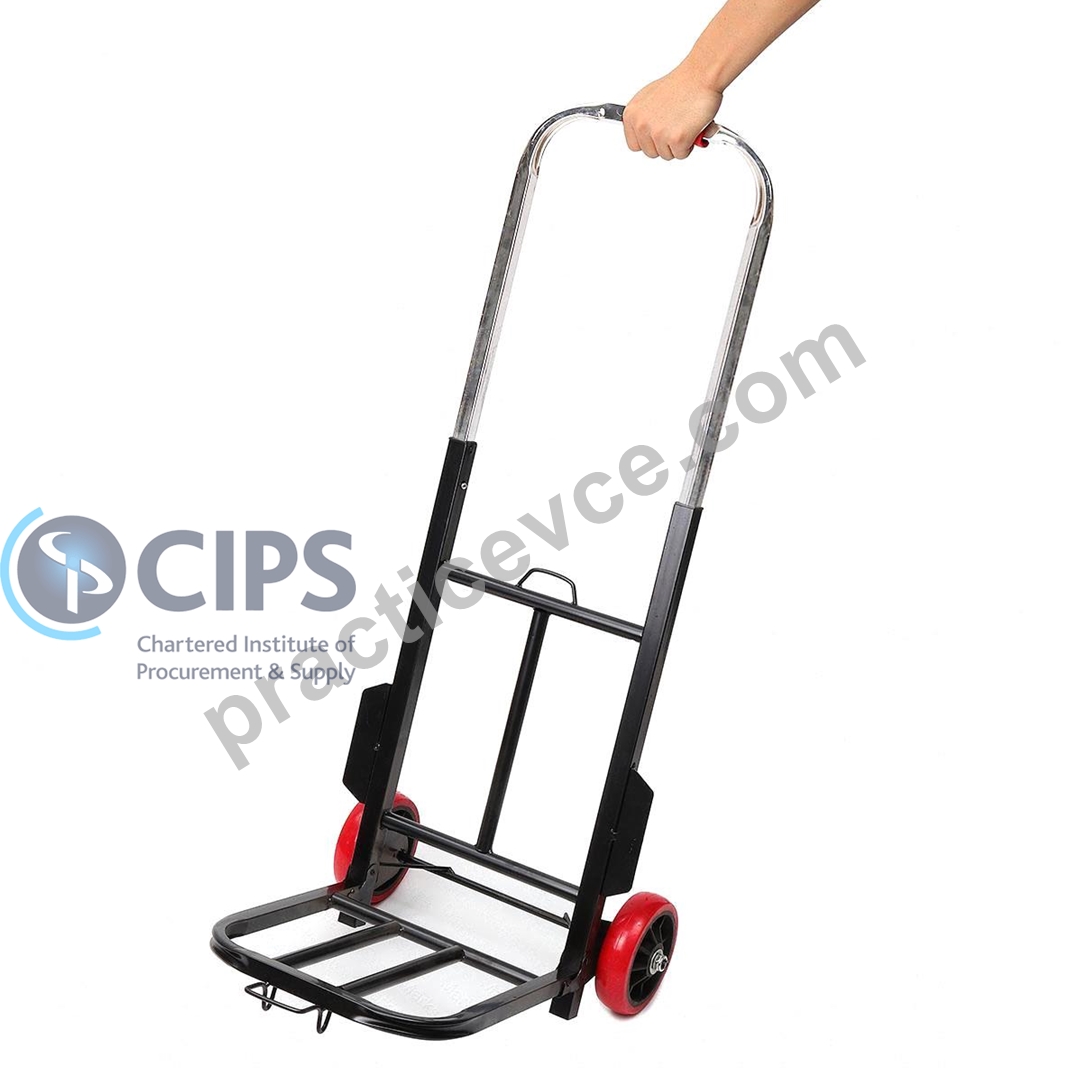
PALLET STACKER is designed to lift and stack pallets. This one is fully mobile so can move easily around the warehouse. An operator would typically sit or stand while driving like a counter-balanced, reach or straddle lift truck.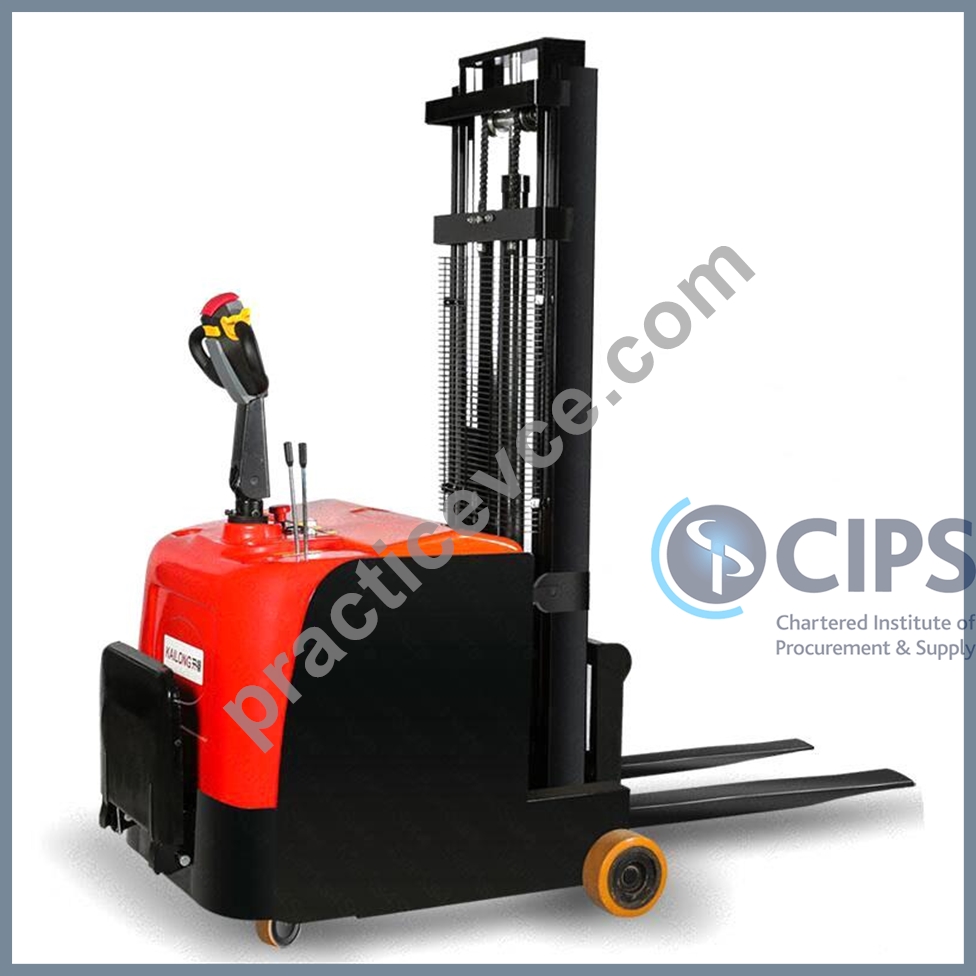
LO 1, AC 1.3
NEW QUESTION # 132
The ABC approach involves classifying inventory items by unit cost, with expensive items classi-fied as 'A' items and low cost items classified as 'C' items. Is this statement true?
- A. Yes, 'A' items represent approximately 20% of total unit prices
- B. No, ABC analysis considers the supply risks associated with an inventory item
- C. No, ABC analysis considers the usage of each inventory item
- D. Yes, 'C' items with the lowest unit prices are the tail spends
Answer: C
Explanation:
ABC analysis is an approach for classifying inventory items based on the items' consumption val-ues.
Consumption value is the total value of an item consumed over a specified time period, for example a year.
The approach is based on the Pareto principle to help manage what matters and is applied in this context:
- A items are goods where annual consumption value is the highest. Applying the Pareto principle (also referred to as the 80/20 rule where 80 percent of the output is determined by 20 percent of the input), they comprise a relatively small number of items but have a relatively high consumption value. So it'slogical that analysis and control of this class is relatively intense, since there is the greatest potential to reduce costs or losses.
- B items are interclass items. Their consumption values are lower than A items but higher than C items. A key point of having this interclass group is to watch items close to A item and C item classes that would alter their stock management policies if they drift closer to class A or class C. Stock management is itself a cost. So there needs to be a balance between controls to protect the asset class and the value at risk of loss, or the cost of analysis and the potential value returned by reducing class costs. So, the scope of this class and the inventory management policies are determined by the estimated cost-benefit of class cost reduction, and loss control systems and processes.
- C items have the lowest consumption value. This class has a relatively high proportion of the total number of lines but with relatively low consumption values. Logically, it's not usually cost-effective to deploy tight inventory controls, as the value at risk of significant loss is relatively low and the cost of analysis would typically yield relatively low returns.
LO 2, AC 2.1
NEW QUESTION # 133
Which of the following statements holds true about inventory holding costs?
- A. They depend upon the opportunity cost of tying up funds and the average value of the stock holding
- B. They are independent of the average stock level
- C. They decline as the cost of the inventory item rises
- D. They always exceed total ordering costs
Answer: A
Explanation:
Holding costs (carrying costs) are the costs associated with the storage and handling of physical stock. There are two different types of holding costs:
- Costs related to the value of the goods: financial costs (i.e. the interest on the working capital tied up in inventory, which may be the bank borrowing rate or the company's target for return on capital); cost of insurance; losses due to product deterioration; losses due to obsolescence and redundancy of inventory; losses due to theft, accidental damage etc.
- Costs related to the physical characteristics of the inventory include the following: storage space; power, heat and lighting of the store; movement equipment; labour costs; administration costs.
Reference:
LO 2, AC 2.2
NEW QUESTION # 134
Which of the following are benefits of enterprise resource planning (ERP)?
Select TWO that apply.
- A. Lots of staff training is needed due to system complexity
- B. A reduction m process time and associated costs
- C. The high cost of installation of the system helps financial planning
- D. All elements of the system are not immediately implemented
- E. Allows improved data-sharing and communication
Answer: B,E
NEW QUESTION # 135
Decommissioning, removal and disposal of assets may have impact on the environment. An organisation should have policies and procedures in place to enhance its environmental performance. Which standard family provides the guidance on environmental policies and procedures?
- A. ISO 9000 family
- B. ISO 22000 family
- C. ISO 27000 family
- D. ISO 14000 family
Answer: D
Explanation:
The ISO 14000 family of standards are developed by ISO Technical Committee ISO/TC 207 and its various subcommittees. For a full list of published standards in the series see their standards catalogue. ISO 14001 provides requirements with guidance for use that relate to environmental systems. Other standards in the family focus on specific approaches such as audits, communications, labelling and life cycle analysis, as well as environmental challenges such as climate change.
ISO 27000 family of standards concerns information technology, with the goal of improving security and protecting company assets. Started in 2005, the two most popular standards are ISO 27001:2013 and 27002:
2013. 27001 is management-based system, whereas 27002 is a technical document, focused on the individual and putting a code of conduct in place. Organizations can choose either standard; ISO 27001 has over 22,000 certifications worldwide. It is a broad standard, and for this reason the certification can be customized to fit the needs of the organization, and is not mandatory.
ISO 22000 sets out the requirements for a food safety management system and can be certified to it. It maps out what an organization needs to do to demonstrate its ability to control food safety hazards in order to ensure that food is safe. It can be used by any organization regardless of its size or position in the food chain.
ISO 9001 is a family of quality management standards, there are fourteen in total. Of these, ISO 9001:2015 is the only one that can be certified to. It was first published in 1987, and has since been updated about every 7 years. The standard details how to put a Quality Management System (QMS) in place to better prepare your organization to produce quality products and services. It is customerfocused, and places an emphasis on continuous improvement and top management processes that extended throughout the organization.
NEW QUESTION # 136
An organisation always obtains negative cash flow regarding removal and disposal of assets. Is this statement true?
- A. No, disposal of assets always bring positive cash flow to the organisation
- B. Yes, some assets require enormous decommissioning costs
- C. No, the organisation may recover the value of the assets by reselling it
- D. Yes, the organisation incurs high maintenance cost during the disposal processes
Answer: C
Explanation:
Assets in their end of life need to be removed or disposed. Though an organisation can incur some costs in decommissioning or removal of the assets, it may recover costs by reselling the assets. Therefore, sometimes the organisation can gain positive cash flow from removal and disposal of assets. The answer should be "No, the organisation may recover the value of the assets by reselling it".
LO 3, AC 3.3
NEW QUESTION # 137
Which of the following are examples of subjective methods of forecasting? Select TWO that apply.
* Trend line analysis
* Moving averages
* Market research
* Expert opinion
* Seasonal variations
- A. 1 and 2 only
- B. 3 and 4 only
- C. 1 and 5 only
- D. 2 and 5 only
Answer: B
Explanation:
Subjective forecasting methods, like market research and expert opinion, rely on qualitative judgment rather than numerical data. These methods are valuable when historical data is limited, or when anticipating market changes. Whole-life asset management may use subjective forecasts for long-term planning and to account for factors not captured in quantitative data.
NEW QUESTION # 138
Which of the following are typical characteristics of 2D barcodes? Select TWO that apply.
- A. The 2D barcodes are machine-readable
- B. Every 2D barcodes must conform international standards
- C. 2D barcodes can be read by linear scanners
- D. 2D barcodes can contain more data than 1D barcodes
- E. 2D barcodes are exclusively used for marketing purpose
Answer: A,D
Explanation:
Two-dimensional (2D) barcodes look like squares or rectangles that contain many small, individual dots. This has many different types (i.e. Data matrix, QR codes, Aztec code,...) and several different standards in use (i.
e. GS1 standards, ISO/IEC 18004:2015). It can be substituted for 1D barcode, but it has the capability to hold a larger amount of data. For examples, GS1 Data Matrix can contain 3116 Numeric characters or 2335 Alphanumeric characters while GS1-128 barcode has maximum capacity of 48 characters.
Like 1D barcodes, 2D barcodes are also machine-readable with dots/squares and spaces. They have symbology like this:
Since the code is two dimensional, conventional laser scanner can't read it. 2D barcodes require imaging scanner to read.
2D barcodes can be also used for different purposes throughout the supply chain: identifying prod-ucts/SKU (single unit, packaged or pallet), identifying content of a purchase order or delivery, identifying the batch number from which the item originates, identifying the manufacturer, country of origin etc, tracking status of an order, shipment or delivery Reference: CIPS study guide page 44-46 LO 1, AC 1.2
NEW QUESTION # 139
Which of the following is the cylindrical container that is suitable for liquids or loose material
- A. Storage bag
- B. Drum
- C. Tote box
- D. Industrial container
Answer: B
Explanation:
Drum is the container for stock, which is usually cylindrical and can be made from a variety of materials.
Contents are usually loose material or liquids
A picture containing tableware, kitchen appliance Description automatically generated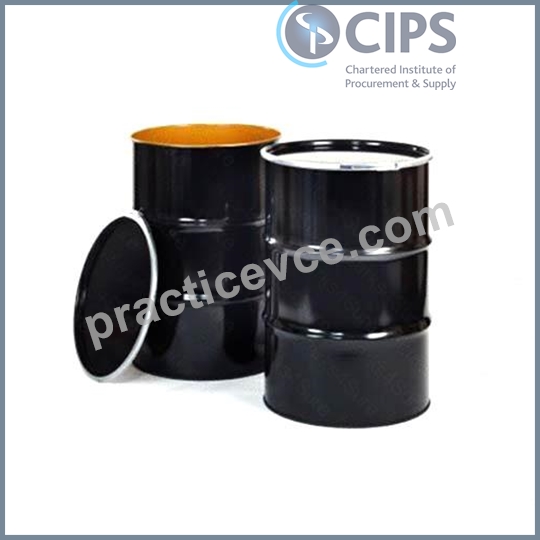
Tote box is the reusable storage box. These can be open or have lids or flaps to close them and come in a large variety of sizes and weight loadings.
A picture containing text, container, basket Description automatically generated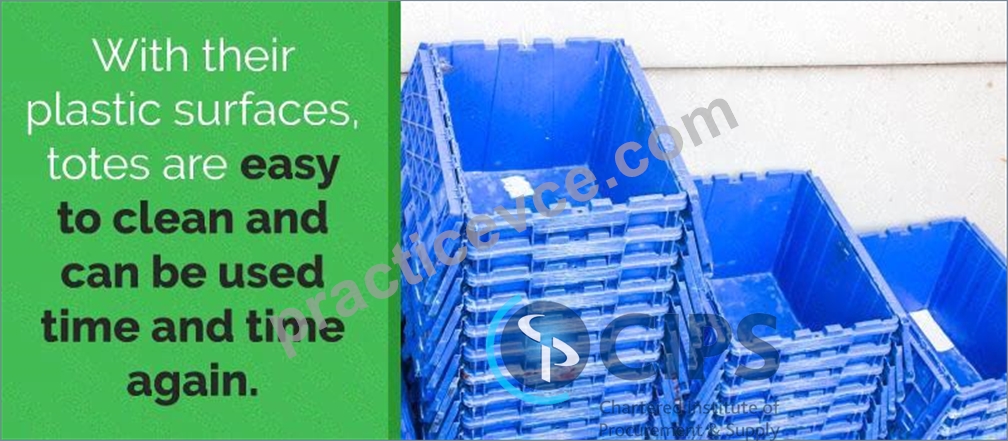
A tote is ideal for holding and hauling items such as: tools, fasteners, bark dust, dry cement, cords, wires, smaller boxes,...
For larger and bulkier items, industrial containers make it easy to keep things stored and in one spot for transportation. Due to the metal interior, an industrial container is more appropriate for items that - unlike tools and small pieces of machinery - lack any surface sensitivity.
A picture containing text, ground, cargo container, computer Description automatically generated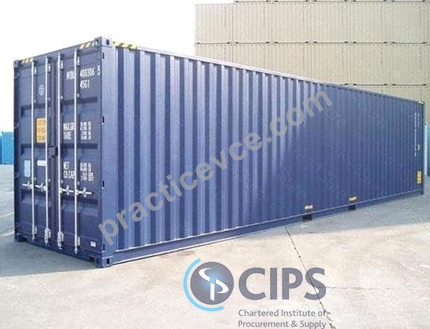
Solid containers like bins and totes are far from the only storage devices for the various materials that are needed in abundance at factories and warehouses. Another option is the storage bag, which can be used to hold bulk supplies of items until they're needed for the department shelves or assembly lines.
A close-up of a bag Description automatically generated with medium confidence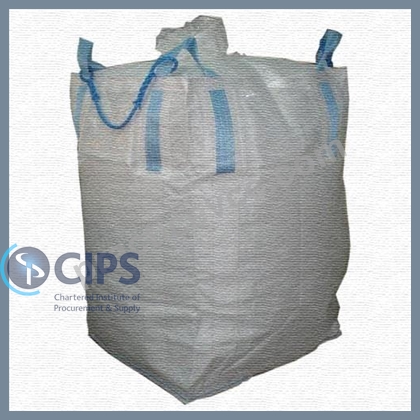
LO 1, AC 1.1
NEW QUESTION # 140
......
CIPS L4M7 (CIPS Whole Life Asset Management) Exam is a professional certification offered by the Chartered Institute of Procurement and Supply (CIPS). CIPS Whole Life Asset Management certification is designed for professionals who are involved in managing the lifecycle of assets, such as equipment, facilities, and infrastructure. The CIPS L4M7 Exam covers a wide range of topics, including asset management strategies, risk management, maintenance planning, and disposal of assets.
The New L4M7 2026 Updated Verified Study Guides & Best Courses: https://vceplus.practicevce.com/CIPS/L4M7-practice-exam-dumps.html